LAB 001· Zyntria Labs R&D

Concept study

Signal Desk

An enquiry-triage and follow-up concept for a small service business.

Concept study · not shipped work

This Zyntria Labs concept study uses fictional people, organisations, data and interface states. It is not a client project, deployed product or claim of measured performance.

Question being explored

Can a narrow workflow prepare a useful first response while keeping facts, judgement and sending authority with a person?

Small teams may receive enquiries through several channels, then repeatedly classify the request, find the same approved information and prepare a response. Signal Desk explores how those steps could be coordinated without allowing uncertain output to bypass review.

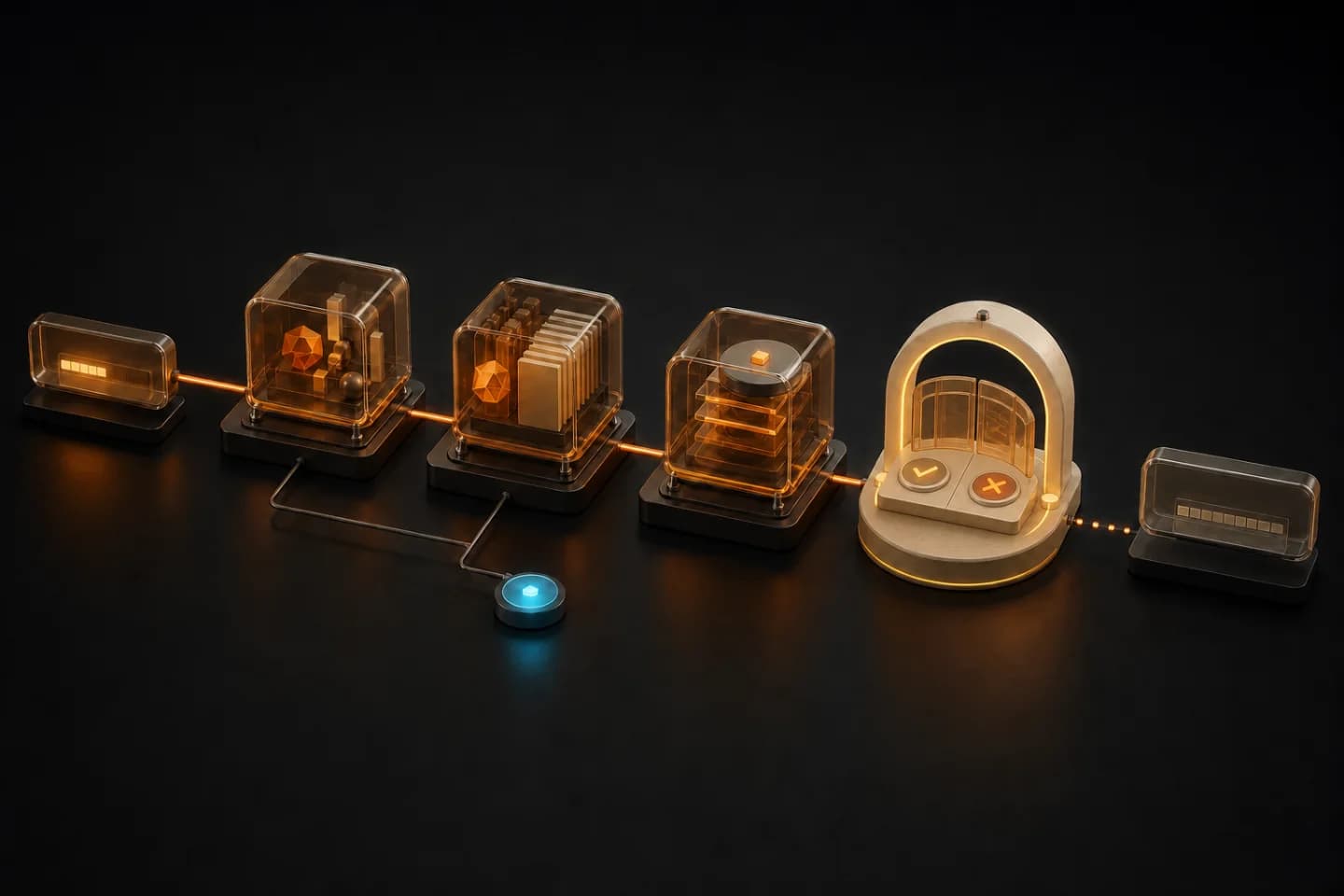
Concept workflow

A staged interaction with review built into the path.

The sequence maps the intended interaction and its review points.
  1. 01

    Receive

    A fictional enquiry enters through an approved intake channel.

  2. 02

    Classify

    The concept proposes a request type and highlights low-confidence details.

  3. 03

    Retrieve

    Only approved fictional business information relevant to the request is surfaced.

  4. 04

    Draft

    A response is prepared with source context and unresolved questions visible.

  5. 05

    Review

    A person corrects the classification, checks the facts and decides whether to send.

  6. 06

    Record

    The approved result and any exception are represented as an update to a fictional CRM.

Human-control point

A person keeps the consequential decision.

No response is sent by the concept. A person reviews the proposed classification, supporting context and wording, then makes the external communication decision.

Technical approach

Production questions the concept exposes.

  • A production implementation would require explicit source permissions and retention rules.
  • Retrieval should be limited to approved business material and expose useful provenance to the reviewer.
  • Sending, CRM updates and other external effects should be separate, permissioned actions with appropriate logs.

What is fictional

The demonstration boundary is explicit.

  • The service business, people and enquiries
  • All business knowledge and customer information
  • The CRM and communication events
  • Any timing, confidence or status values shown in the interface

Limitations

What this concept does not establish.

  • This is an interface and workflow concept, not a deployed business system.
  • It has not been tested with live customer information or a real CRM.
  • The concept does not establish legal, privacy, security or regulatory suitability for any organisation.
  • Reliability, cost and operational outcomes have not been measured.

Design considerations

Questions the concept brings into view.

  • A review screen needs to show the source context, not only the generated draft.
  • Low-confidence classification should change the route through the workflow rather than appear as decorative data.
  • A safe exception path is part of the main interaction, not an edge-state to design later.

Questions before a real test

Resolve the operating context before connecting real tools or data.

  1. 01Use approved, representative and non-sensitive sample material to test whether the review flow is understandable.
  2. 02Define success, failure and exception criteria before connecting any real business tools.
  3. 03Review privacy, security, permissions, retention and operational ownership for the specific organisation.

Start with the real problem

Have a workflow worth exploring?

Bring one repetitive process. Do not include confidential, sensitive or personal information in the initial message.